One of my favorite ways to review Geometry vocabulary is through the exciting and engaging game of LCR. All you need is a set of the LCR dice which you can buy at any dollar store. I have the set of cards with the directions in the link below, but just know that it is a teacher-faciliated game as we ask questions to students and we share the answers during the game so everyone gets practice with the definitions. The cards are passed left, right and sometimes leave the game when a center is rolled. The winner is the person with the last card. No one is ever out of the game since cards move left and/or right every roll. Students stay engaged the whole time since there is no way to predict who the winner will be.
I begin playing LCR with Kindergarteners using a set of polygons and non-polygons (good for all grades - I've shared the download below) to help review some foundational understandings that every polygon is a closed figure with straight sides and the names we use for them are determined by the number of those straight sides. Take a look at these images below and what do you notice? What do you wonder?
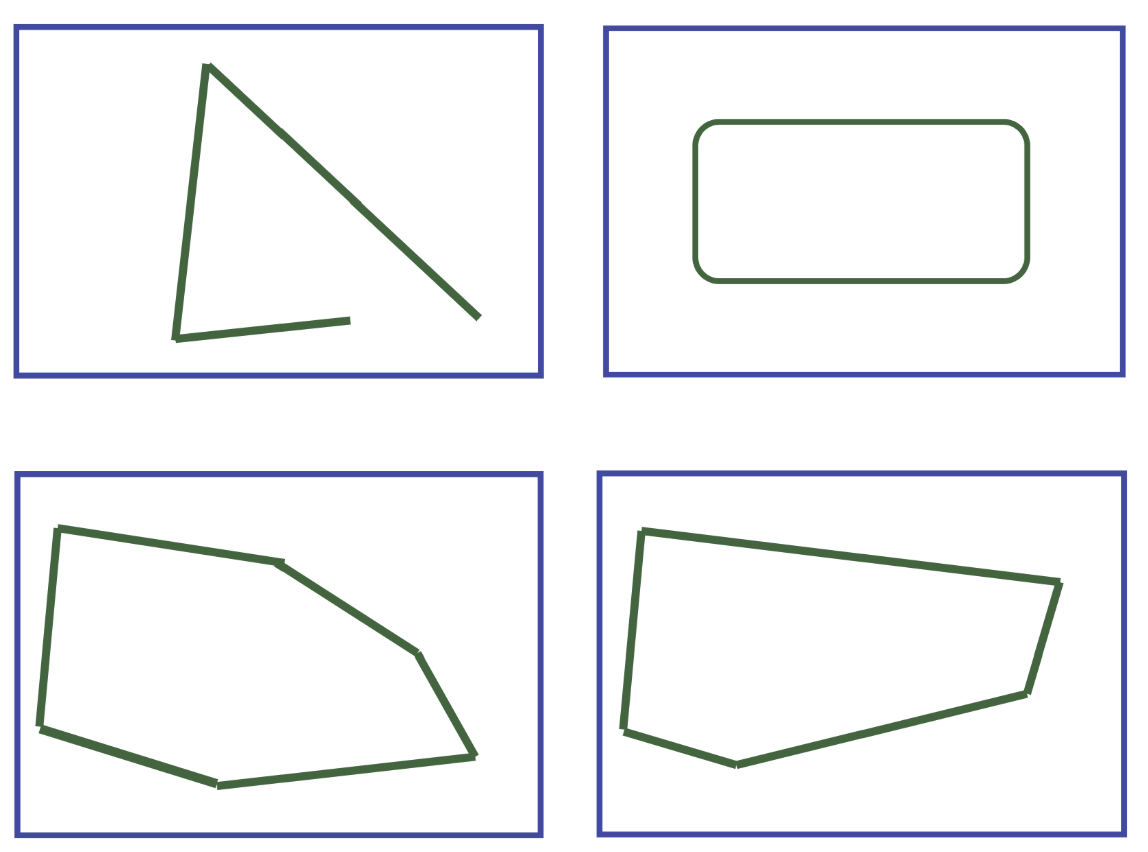
The top two images don't show polygons - the triangle-looking one is open and the rectangle-looking one doesn't have straight sides. If we don't attend to the closed figures and straight sides, young children mistakenly think they are those shapes. The bottom two are a hexagon and pentagon, but how often do you think students see them like this? Typically students are only exposed to regular hexagons and pentagons where all the sides are of equal length.
Here are few other tidbits that I didn't learn until I had to teach it to my 5th graders. The prefix "rect" means right, so a rectangle is a quadrilateral that has 4 right angles. That's it. No need to mention parallel sides or the length of the sides. Since all squares have 4 right angles, they can be classified as rectangles. We focus on that concept in grade 4, but we want to be sure in the primary grades not to say rectangles have two long and two short equal length sides since it is possible that all the sides could be equal.
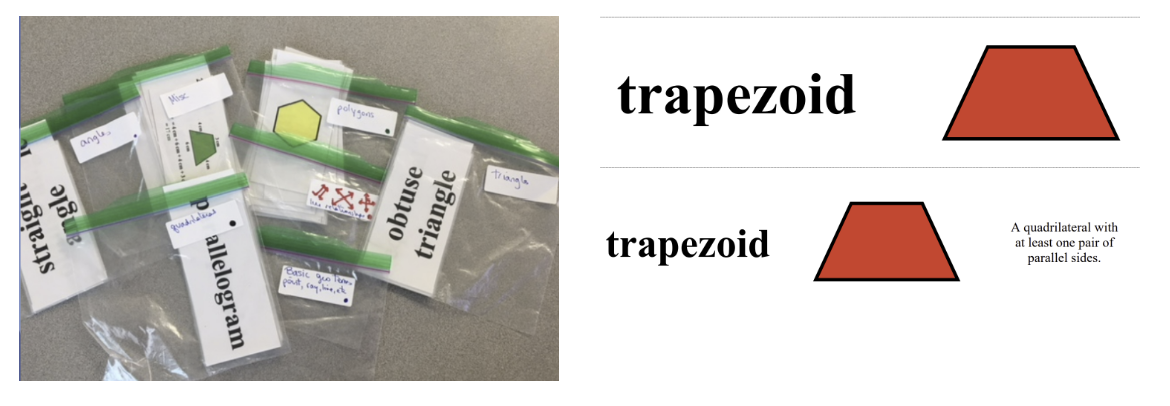
As a math community, we haven't agreed yet on a definition of a trapezoid. In some states and countries, a trapezoid is a quadrilateral that has exactly one pair of parallel sides which we call the exclusive definition. In other states and countries, the inclusive definition of a trapezoid is used as a quadrilateral that has at least one pair of parallel sides which then opens the door for parallelagrams, rhombi, rectangles and squares to be also classified as trapezoids. You'll need to check your state standards to see which definition is used.
I have created a set of polygons and non-polygons to expose students to these concepts in a fun and engaging game of LCR.
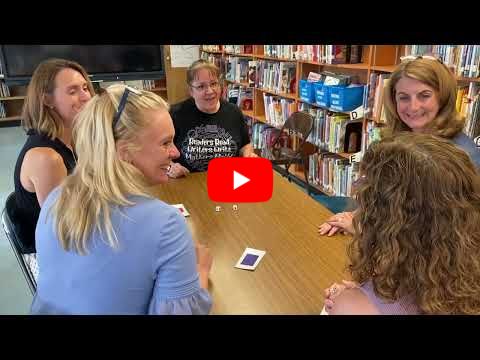
I also love to play LCR with other math vocabulary as well. I go the Granite School District Math Vocabulary site which has all the math vocabulary for each grade already made with images and definitions that can be used with the game as well. I print out the vocab I want to focus on and then put them in baggies so I can differentiate the topics I'm using in the game for the students I'm working with. Below you'll see how I organized my sets of ideas, a sample page from the Granit State Vocabulary site, and a video of me facilitating LCR focusing on classifying quadrilaterals.
|
I hope you enjoy playing LCR with your students as you help them own the Geometry words and concepts! Such fun!
Take care!
Ann Elise